
Collection 7 Technique
- Home
- /
- A Beautiful Melody
- /
- Collection 7 Technique
THE JOHN CHAMBERLAIN DRAPING TECHNIQUE
INVENTED BY ANGELO FAIR / OPUS VI 2025
Improvisation is the Pattern
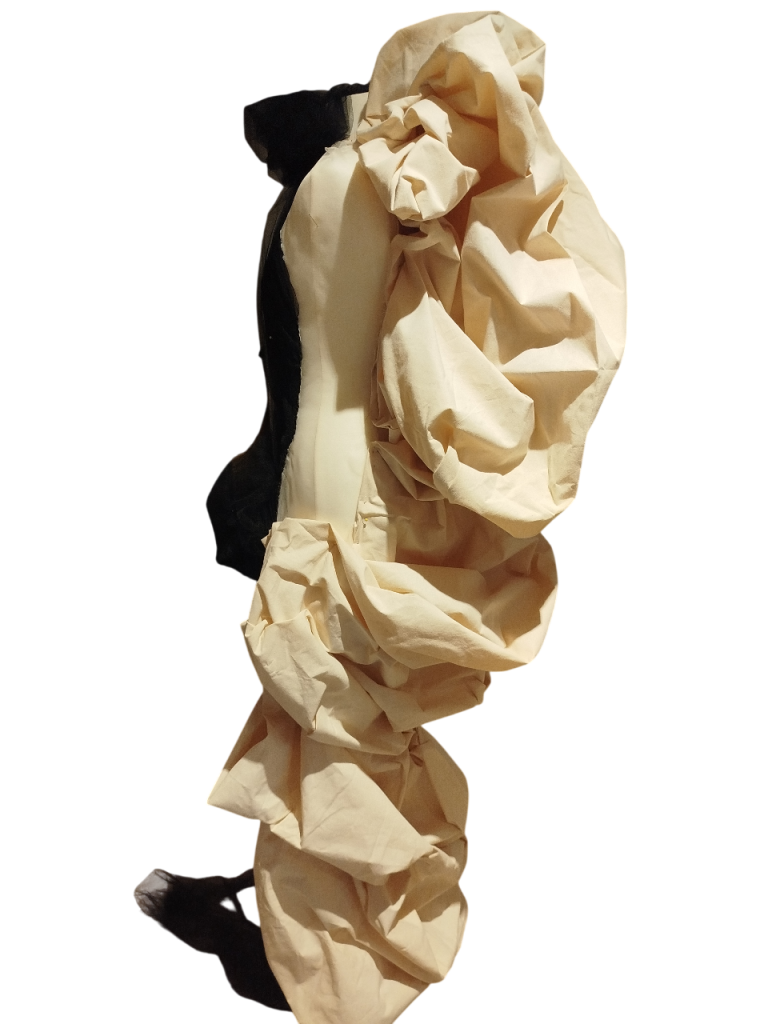
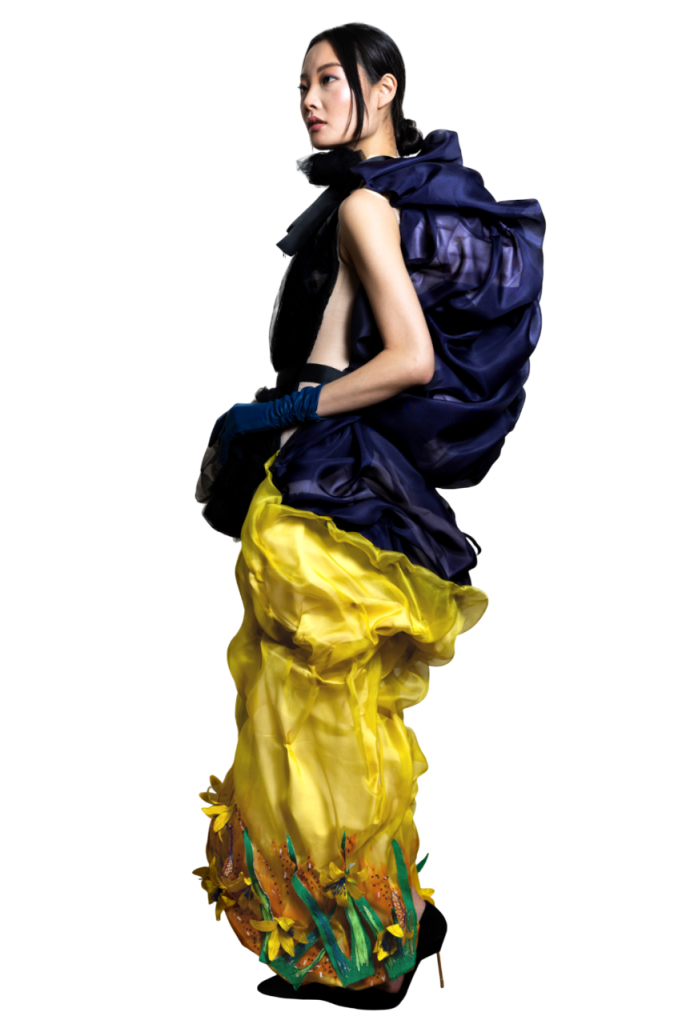
Conflict is the Aesthetic
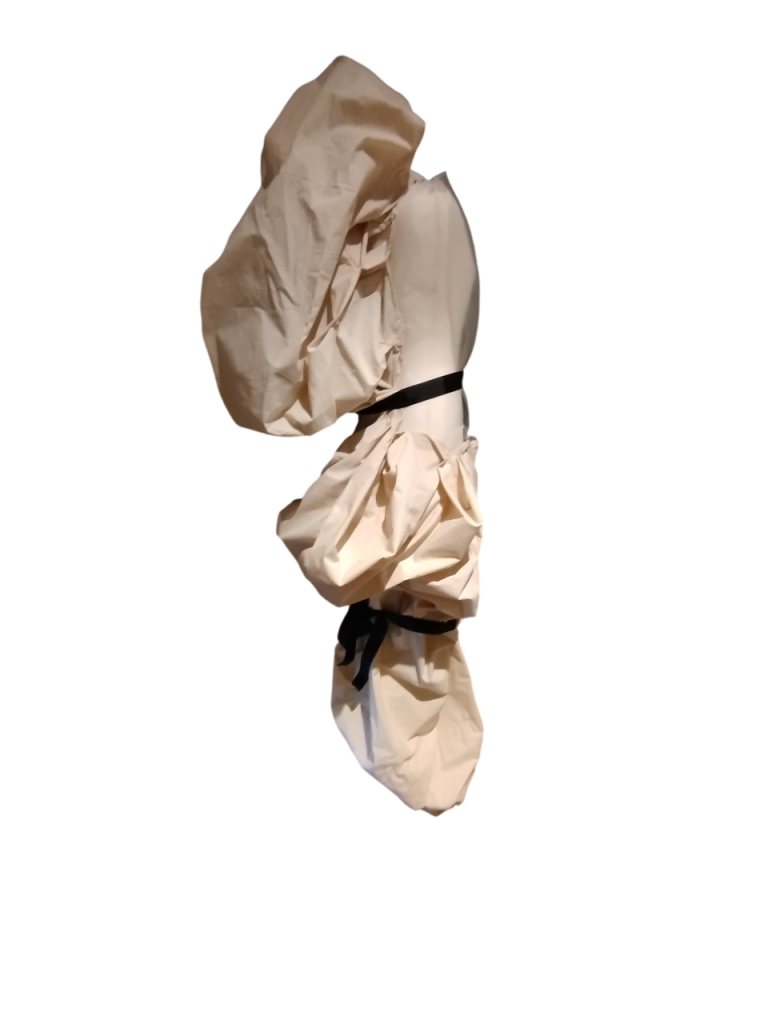
thousands of hand-stitches
For decades, the highest standards of draping were defined by control. Masters such as Madeleine Vionnet explored fluidity through the bias cut, while Madame Grès sculpted form through disciplined pleating. Figures like Cristóbal Balenciaga and Christian Dior achieved architectural volume through rigorous pattern engineering, internal structures, and calculated underpinnings. The objective was a perfected, controlled surface.
Even contemporary couture continues to rely on pre-determined engineering to achieve its effects.
But what occurs when the couturier operates not as an engineer, but as a sculptor?
A Sculptor’s Revelation
Sculpture has always shaped my approach to form. From Gian Lorenzo Bernini to Constantin Brâncuși, material is not persuaded into shape but compelled.
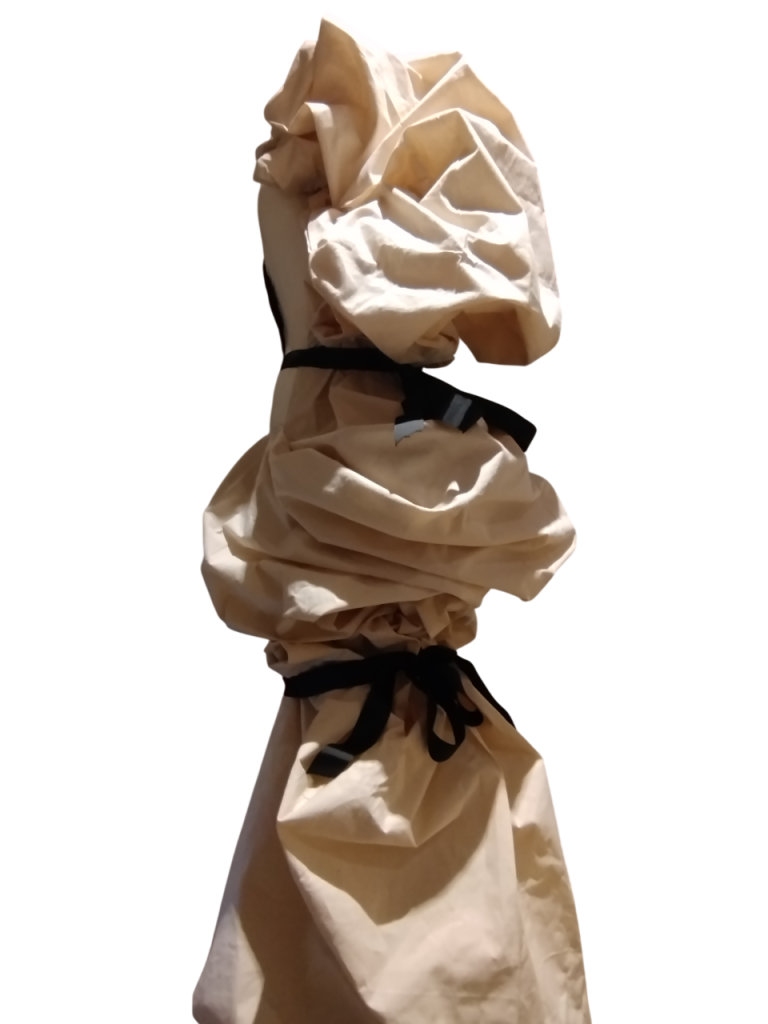
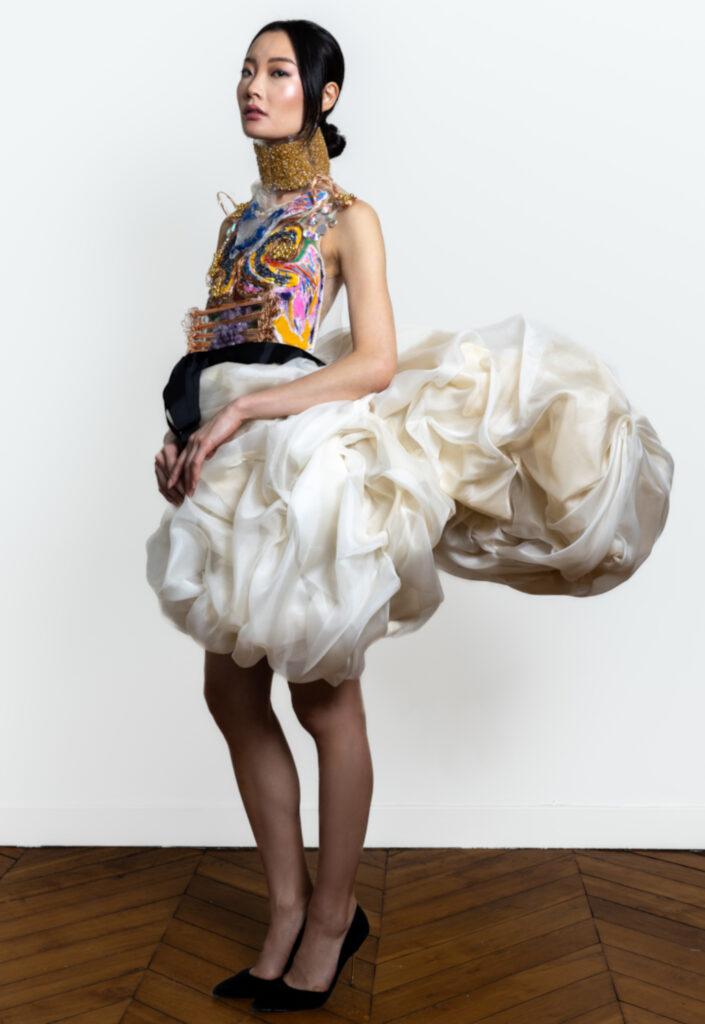
John Chamberlain marked a decisive shift for me. His crushed automobiles were not aesthetic gestures, but a complete philosophical break — force replacing pre-calculation, collision replacing design. Applied to dressmaking, this results in a discipline where structure is not pre-designed, but forged through direct physical engagement. Control creates chaos, and chaos, in turn, demands absolute control.
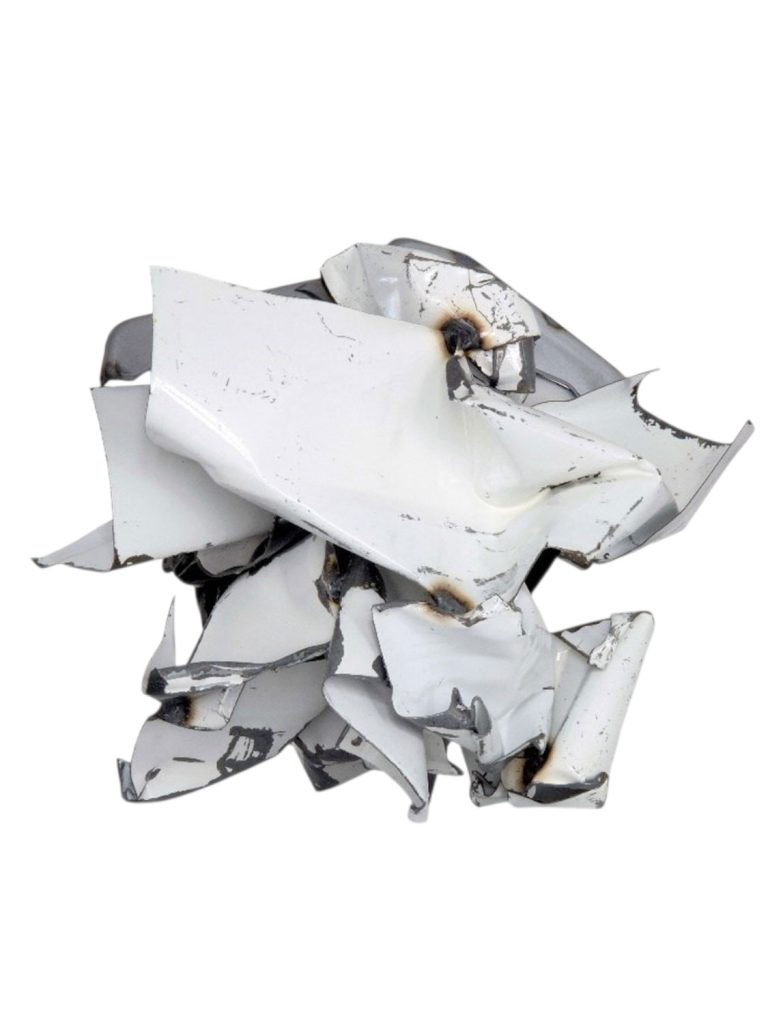
The Power of Transparency
A crucial element of this technique is the use of transparent silk organza or chiffon. This isn’t merely a material choice; it’s a conceptual decision.
By draping these delicate fabrics over the raw, crumpled exoskeleton, the internal structure is exposed—visible beneath the surface. This transparency invites the viewer to witness the process, the tension, and the craftsmanship. The play of light and shadow across the exposed understructure becomes an integral part of the garment’s visual language, transforming it into a living sculpture.
The John Chamberlain Style bridges the gap between the couturier’s hand and the sculptor’s mind.
It demonstrates that the highest level of craft can emerge not from measured precision, but from visceral, unmediated interaction with raw material.
It is high art that is forged, not merely sewn.